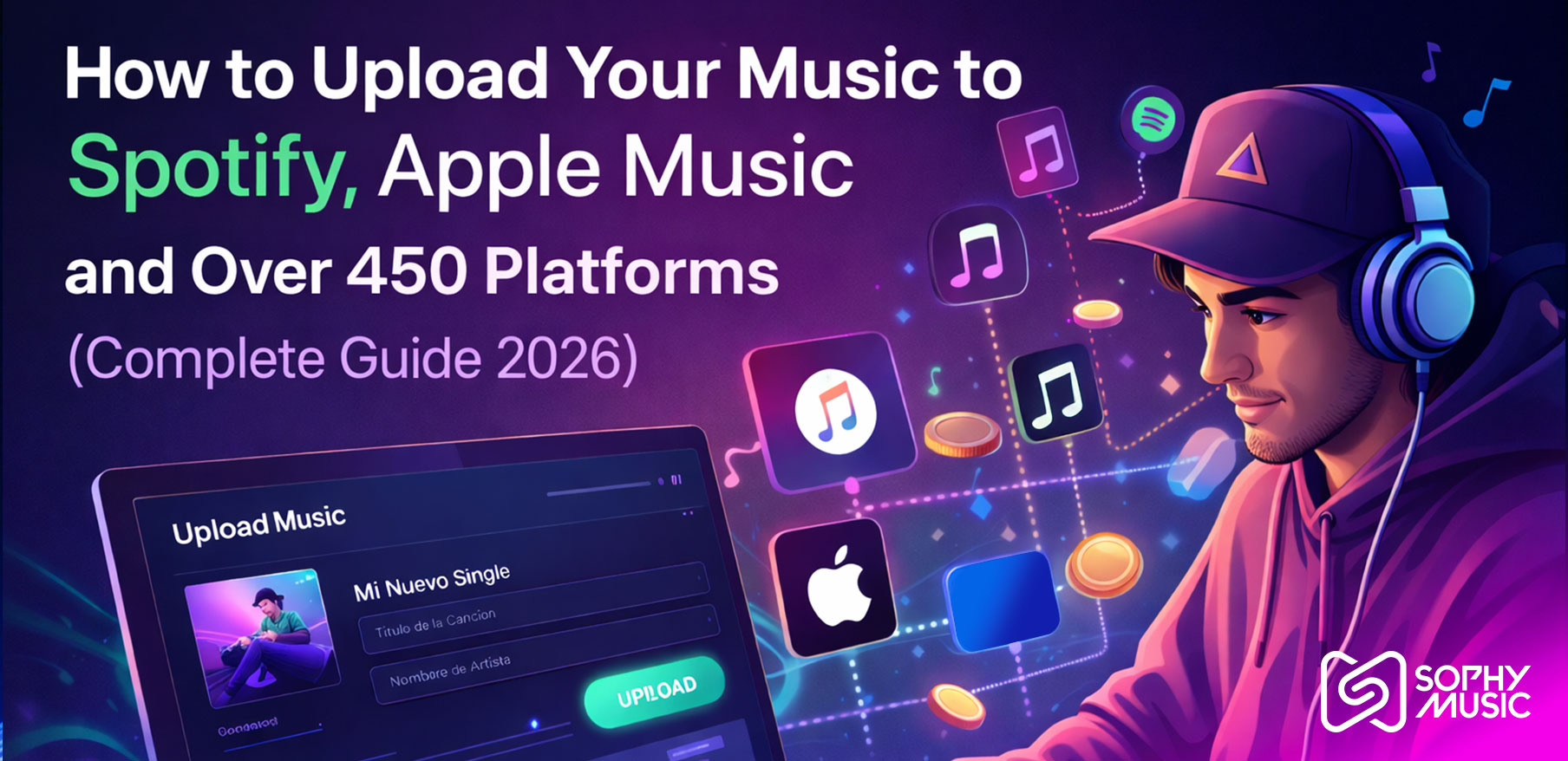
How to Upload Your Music to Spotify, Apple Music, and Over 450 More Platforms
Today, any independent artist can release their music worldwide thanks to digital distribution. Platforms like Spotify, Apple Music, YouTube Music, and many others allow millions of people to discover new music every day.
However, to achieve a successful release, it's important to understand how the music distribution process works and properly prepare your release.
In this comprehensive guide, we explain step by step how to upload your music and maximize its global reach.
1. Prepare your song with professional quality
Before uploading your music to digital platforms, make sure the audio file is of professional quality.
Standard industry recommendations:
* WAV format
* 16 or 24 bits
* 44.1 kHz
* Distortion-free audio
* Approved final master
Audio quality is fundamental for your music to compete in the global market.
2. Design professional cover art for your release
The cover art is one of the most important elements of your release. It's the first thing listeners will see on streaming platforms.
Recommended requirements:
* Minimum size: 3000 x 3000 pixels
* Resolution: 300 DPI
* Format: JPG or PNG
* Clear and professional design
Avoid using:
* Streaming platform logos
* Pixelated images
* Copyrighted content without permission
A good cover image helps convey professionalism and strengthens the visual identity of your artistic project.
3. Complete your music metadata correctly
Metadata is the information that identifies your music on digital platforms.
Among the most important data are:
* Artist name
* Song title
* Album or single name
* Composers
* Producers
* Musical genre
* Release year
Correct metadata ensures you receive your royalties and that your music is correctly identified in the digital ecosystem.
4. Distribute your music to streaming platforms
To get your music on digital platforms, you need to use a music distribution service.
Distribution involves sending your music to stores like:
* Spotify
* Apple Music
* YouTube Music
* Amazon Music
* Deezer
* TikTok
* Instagram
* Facebook
This allows your music to be available to millions of listeners worldwide.
5. Plan your release date
One of the most common mistakes independent artists make is releasing their music immediately after uploading it. It's recommended to schedule the release at least 2 or 3 weeks in advance.
This will allow you to:
* Submit your song to editorial playlists
* Prepare content for social media
* Build anticipation among your followers
* Plan promotional campaigns
A good release strategy can make all the difference in your song's performance.
6. Promote your music strategically
Releasing a song is just the beginning. Promotion is key to achieving streams and growth.
Some effective strategies include:
* Creating content on TikTok
* Posting reels on Instagram
* Sharing teasers on YouTube
* Contacting playlist curators
* Collaborating with other artists
Streaming platforms use algorithms that favor songs that receive engagement from the first few days.
7. Analyze your statistics and growth
Once your music is available on the platforms, you can access statistics that show the performance of your release. Among the data you can see are:
* Number of plays
* Countries where you are listened to
* Age of your audience
* Follower growth
* Most popular songs
This data will help you improve your strategy for future releases.
Conclusion
The music industry has changed radically in recent years. Today, independent artists have access to tools that allow them to release their music globally without the need for a traditional record label.
With the right preparation, a well-planned release strategy, and the support of a reliable distribution service, any artist can build a solid music career.
If you're looking to distribute your music globally and take your career to the next level, Sophy Music offers professional tools to help you launch your music on over 450 digital platforms and manage your royalties transparently.